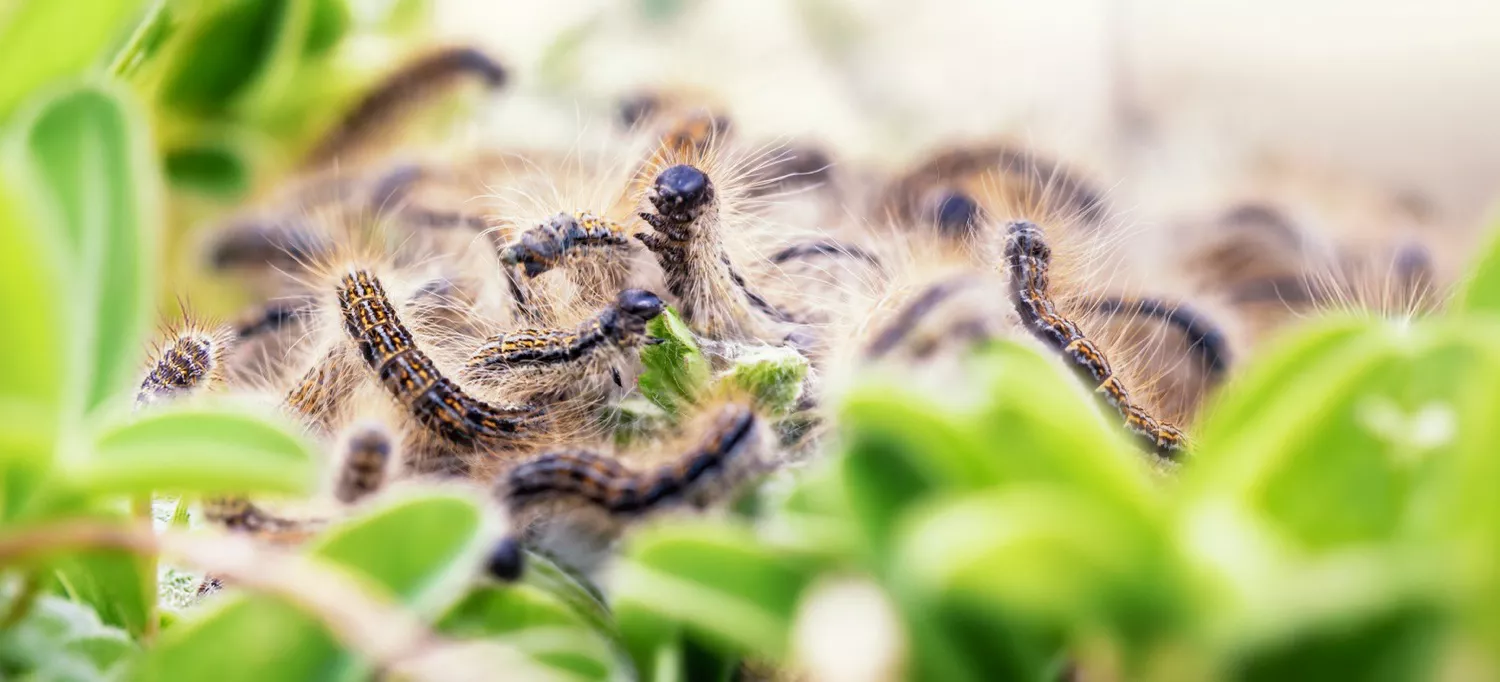
It looks harmless, almost cute: a gray-blue caterpillar with up to 600,000 hairs develops into a brown-grey moth. But if you see an oak processionary moth, you should definitely keep your distance. "Please do not touch", this well-known warning applies here in particular. "The caterpillar's stinging hairs can trigger allergic reactions: Redness, persistent itching, swelling, breathing difficulties or eye irritation," explains Ralf Bering, team leader of our janitors. So we are grateful for any information about where the pest is spreading on trees.
"Attention, oak processionary moth. Health hazard!": Anyone who lives in the Schuntersiedlung has probably seen these signs before. Several times in recent years, it has been necessary to cordon off small areas with red and white signal tape. A team from the tree care company Giardino then vacuumed up the nests and the danger was eliminated.
The hairs of the caterpillars contain a protein poison that is harmful to humans and animals: thaumetopoein. They are so fine that they are easily spread by the wind. This means that the caterpillar's hair can get into the eyes, onto the skin or into the respiratory tract, even when walking nearby," reports Ralf Bering. That's why we react immediately when we hear or see that oak processionary moths have infested oak trees.
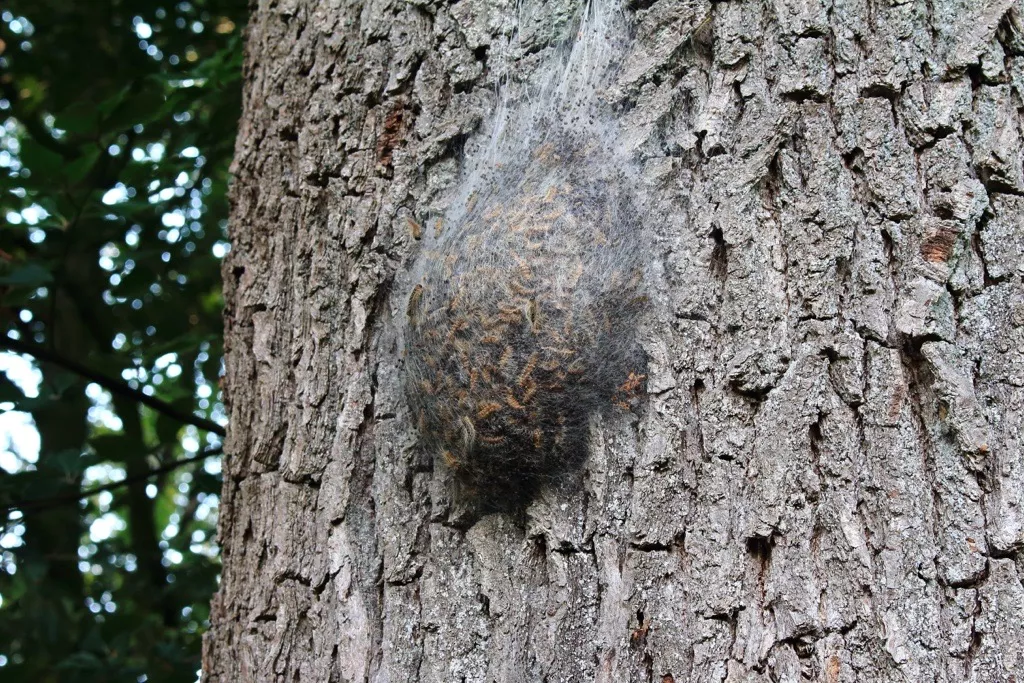
The animals create sack-like nests on the trunk or in the forks of branches. These whitish-grey webs, which contain caterpillar hairs and moulting remains, should not be touched under any circumstances! In the evening, the caterpillars migrate from the nests in long, multi-row serpentine lines to feeding sites in the trees. It looks like a procession. That's how they got their name.
Oak processionary moths like the warm, dry spring. This is why they have become increasingly widespread in recent years, aided by climate change. The caterpillars usually develop from April or May. Between May and July they can then become dangerous due to their stinging hairs. The caterpillars pupate in July and August. From August, they are finally flying - as harmless moths.
Have you seen oak processionary moths in your accommodation?
If so, please contact your janitor.
Central contact by e-mail: hausmeister@baugenossenschaft.de