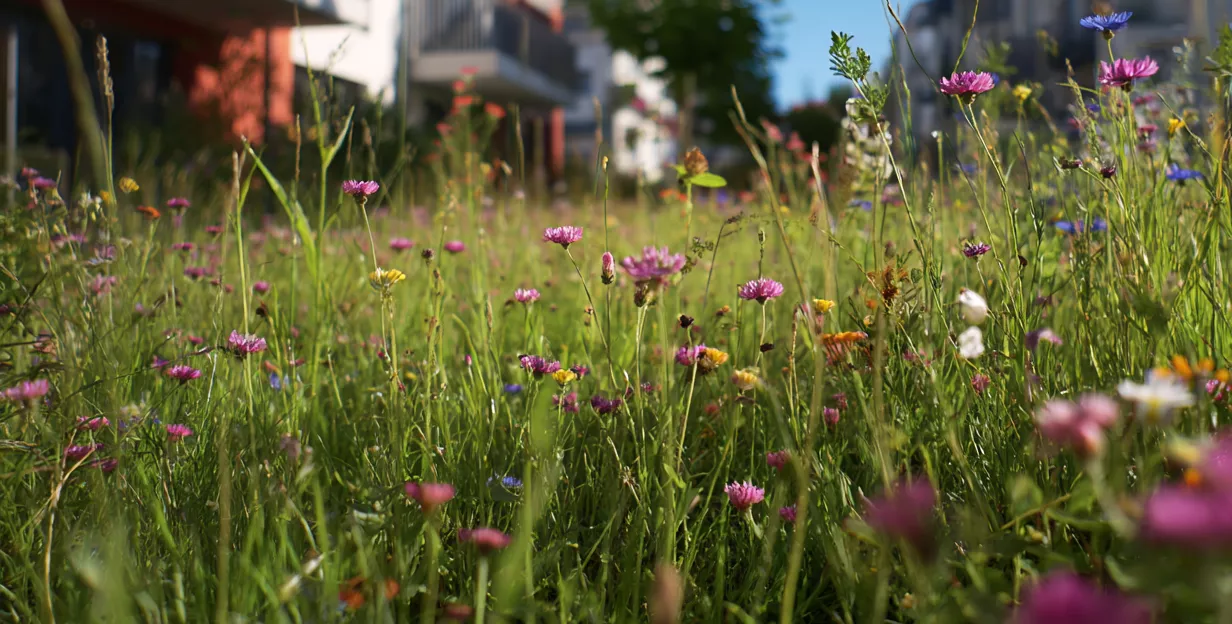
The single-storey commercial space on the site at Görgesstrasse 14 has been undergoing demolition since February. We are creating new living space in the Sackring district: a new building with two 2-room and six 4-room apartments. All of the living space will be publicly subsidized. The property will also provide an attractive habitat for animal residents: Ivy silk bees. During the preparatory measures last year, we learned that an aggregation of wild bees nests on the ceiling of the bunker there - on sandy soil. We are preserving this habitat. We are building around it.
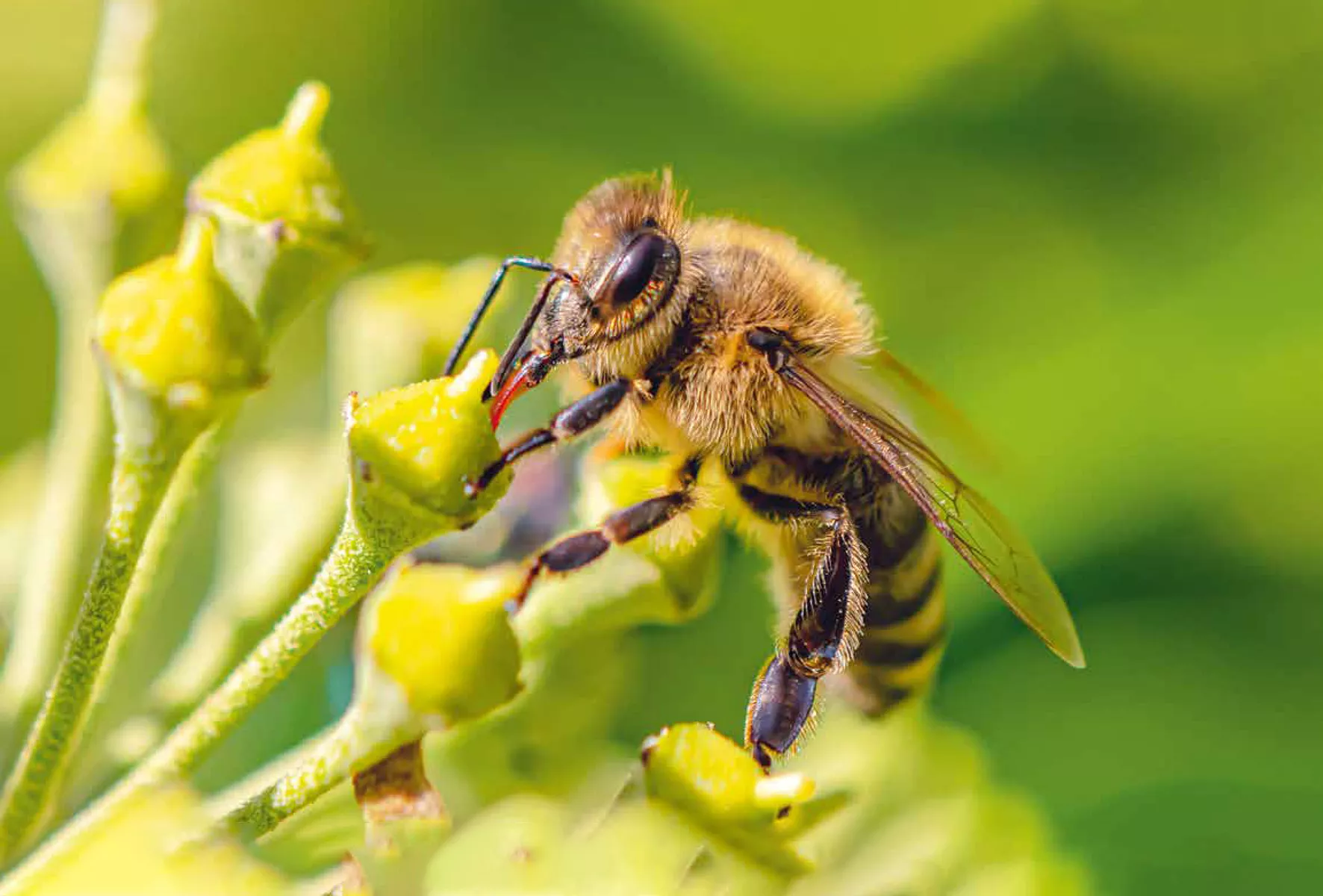
Ivy silk bees are specially protected by nature conservation law. They may neither be killed nor driven away. The bees, which are around one centimeter in size, nest in small self-dug heaps of earth - often several of them close together. Their brood cells are filled with a secretion that resembles silk. Hence their name. Their offspring are fed exclusively with pollen from ivy. As the ivy usually flowers late, from September to November, the ivy silk bees, which are known to be relaxed and peaceful, are not on the move until the fall. The males buzz out on foraging flights in September and October. If a female is found, mating usually takes place immediately. After hatching, the larvae feed on the larvae and overwinter in this stage.
Our commercial premises in Görgesstraße had a partial basement: an air raid shelter. This bunker extended into the outdoor facilities, in the shape of an Us. The ivy silk bees nest on the western side of the bunker, which is covered with topsoil and grass. The location is ideal, as there is an old stand of ivy at the neighboring cemetery. That is why we are not dismantling the bunker in this area. The local fir tree in the inner courtyard will also be retained. We are integrating it into the outdoor facilities.